Peanuts are one of those foods that are always around. They're packed into school lunches, poured into bowls at family gatherings, served at baseball games, tucked into holiday gift baskets, and enjoyed by the handful on road trips. They're one of those foods that always seem to be around, but most of us have never stopped to think about where they actually come from.
At Hubs, we've been preparing Virginia peanuts since 1954, but every batch starts long before it reaches our kitchen in Sedley.
Let's take a closer look at how they're grown, harvested, and prepared before they become the Hubs peanuts you've enjoyed for generations.
Where Do Virginia Peanuts Come From?
Although we call them nuts, peanuts are actually legumes. They grow beneath the ground after the plant flowers above the soil, making them one of the few foods harvested this way.
Virginia is known for producing the largest peanuts in the country. Their size, texture, and flavor make them a favorite for gourmet snacking, gifting, and entertaining.
At Hubs, every variety begins with carefully selected Super Extra-Large Virginia peanuts, chosen for the exceptional size and crunch that have defined the brand for generations.
1. Planting
Virginia peanut seeds are planted in the spring once the soil reaches about 65°F and the risk of frost has passed. The seeds are placed several inches apart in sandy, well-drained soil, giving each plant enough room to grow throughout the summer.
2. Flowering
About a month after planting, small yellow flowers begin to bloom above the ground. Once pollinated, each flower produces a slender stem called a peg. Unlike most plants, the peg grows downward instead of upward, pushing itself into the soil where the peanut pod begins to form.
3. Growing Underground
As the pegs continue developing beneath the surface, peanut pods slowly mature underground over the next several weeks. While the peanuts grow below the soil, the leafy green plant continues growing above ground, absorbing sunlight and nutrients that help the crop develop.
4. Digging
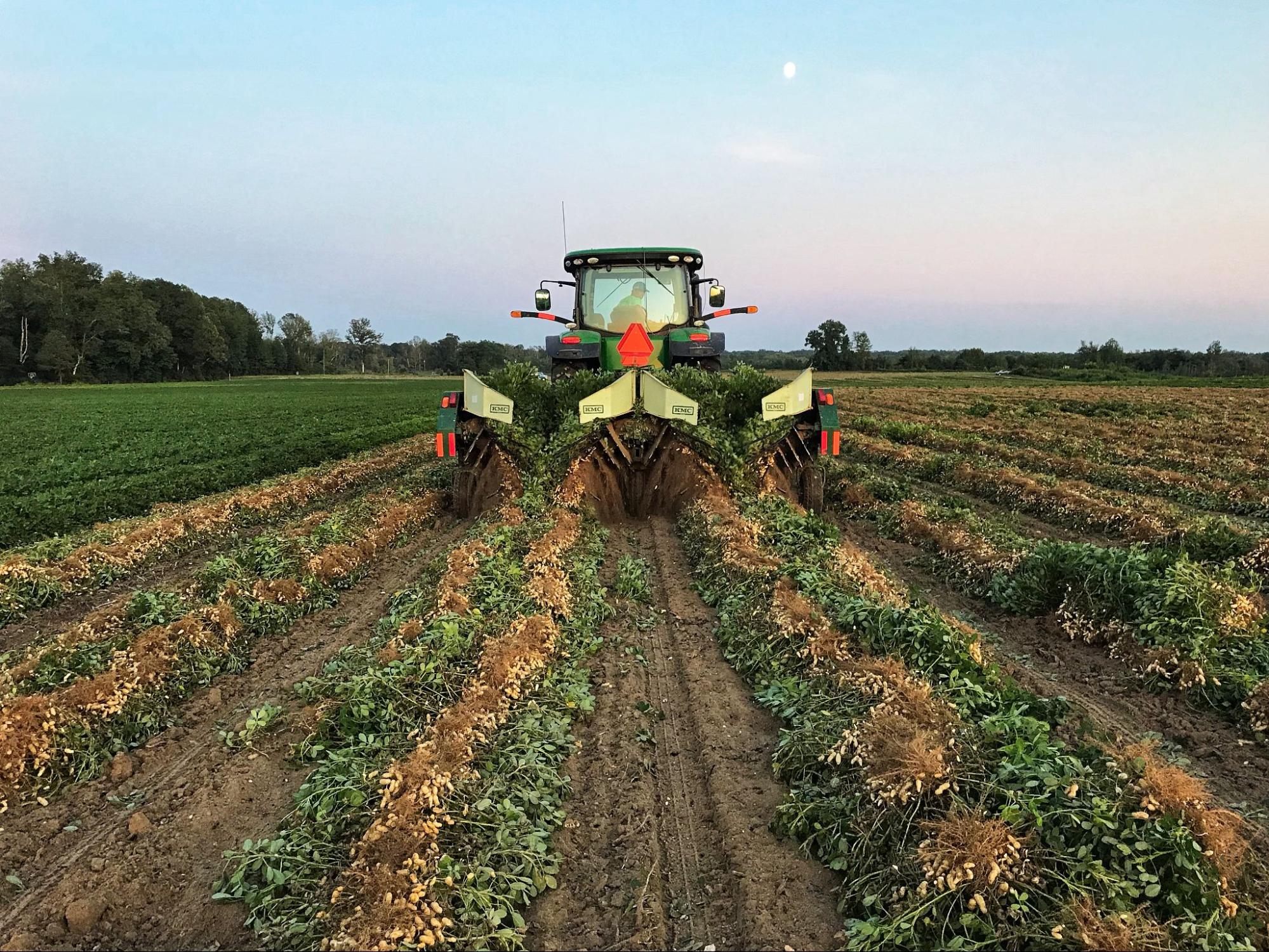
By early fall, the peanuts have reached maturity and are ready for harvest. Farmers use specialized equipment called a peanut digger to gently lift the entire plant from the ground and turn it upside down, leaving the peanut pods exposed to the air while still attached to the vine.
5. Drying
After digging, the plants remain in the field for two to three days to dry naturally in the sun. This step reduces the moisture inside the peanuts, helping preserve their quality and preparing them for harvesting and storage.
6. Picking & Grading
Once the plants have dried, a harvesting machine removes the peanut pods from the vines. The peanuts are then cleaned and graded based on size and quality.
From the Harvest to Hubs
Every peanut follows a similar journey through the field. What makes Hubs different begins after harvest.
In 1954, Dorothy "Dot" Hubbard believed people had never truly experienced the taste of a great Virginia peanut. Using peanuts grown on her father's farm in Southampton County, she perfected her family's recipe and pioneered a unique cooking technique that would eventually become the industry standard for gourmet Virginia peanuts.
She didn't stop there.
Dot insisted on selecting only the largest peanuts from each crop. Those specifications eventually became the highly sought-after Super Extra-Large grade Virginia peanuts are known for today. As demand grew, she and her husband, HJ, continued refining their cooking process while never compromising on quality.
More than 70 years later, Hubs still prepares its peanuts in Sedley, Virginia, where the company first began
Our Best-Selling Virginia Peanuts
What Makes Hubs Peanuts Different?
For more than 70 years, we've believed quality is something you can taste. That's why every step, from selecting the peanuts to sealing each tin, is done with the same care that's defined Hubs since 1954.
-
Super Extra-Large Virginia Peanuts: We select only Super XL Virginia peanuts, prized for their exceptional size, satisfying crunch, and full-bodied flavor.
-
A Time-Tested Cooking Process: Every batch is prepared using the high-heat blister-fry technique pioneered by Dot Hubbard. This seals the flavor and creates a crunch no one has experienced.
-
Made in Sedley, Virginia: More than seven decades later, Hubs peanuts are still prepared where the company began, carrying on a family tradition built on craftsmanship.
-
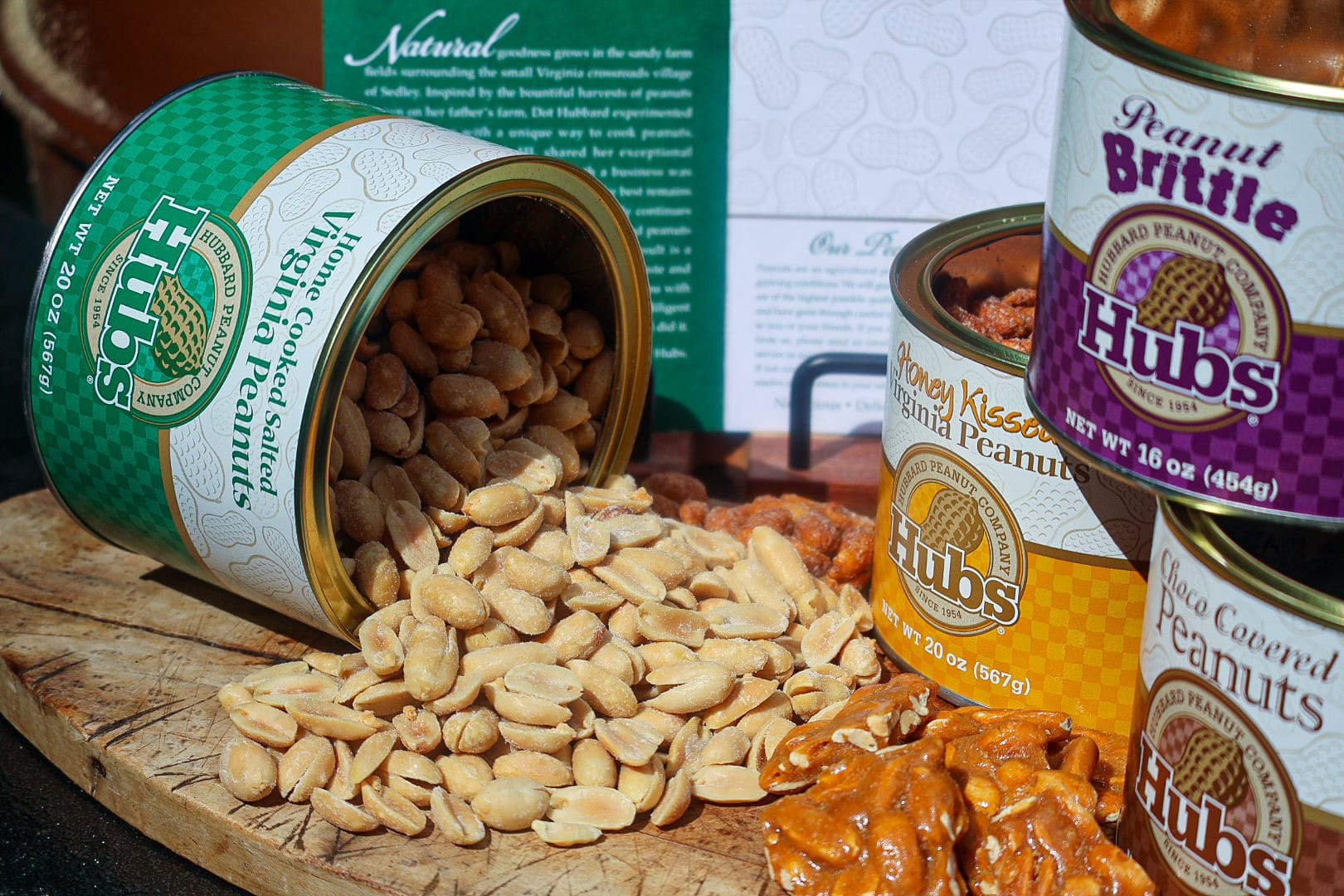
Packed for Freshness: Every reusable vacuum-sealed tin helps protect the quality and flavor from our home to yours.
From planting to harvest, every peanut begins its journey in the field.
At Hubs, that's only where the story starts.
There's nuthing better.